
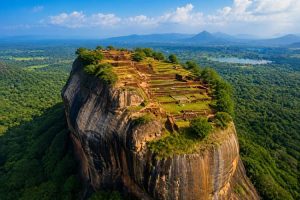
Sigiriya Rock Fortress is one of the most important historical and cultural attractions in Sri Lanka, and a must-visit destination in the country’s famous Cultural Triangle. Rising nearly 200 meters above the surrounding plains, this ancient rock citadel was built in the 5th century by King Kassapa and served as a royal palace, fortress, and urban complex.
Today, Sigiriya is recognized as a UNESCO World Heritage Siteand is celebrated for its advanced engineering, landscaped gardens, ancient frescoes, and unique architectural design. Visitors explore a series of royal water gardens, boulder formations, terraced pathways, the famous Mirror Wall, and the iconic Lion Paws before reaching the summit, where the ruins of the royal palace still remain.
Located in the heart of Sri Lanka’s Cultural Triangle, Sigiriya is often combined with nearby attractions such as Dambulla Cave Temple, Polonnaruwa Ancient City, and wildlife experiences in Minneriya National Park. Its central location makes it an ideal base for travelers exploring Sri Lanka’s cultural heritage, wildlife, and scenic landscapes.
For first-time visitors, Sigiriya offers a complete experience that combines history, nature, art, and panoramic views, making it one of the most memorable highlights of any Sri Lanka tour itinerary.
Why Visit Sigiriya Rock Fortress
Sigiriya is worth visiting because it combines several experiences in one place: ancient history, royal architecture, landscaped gardens, frescoes, scenic views, and a memorable climb. It is one of the best places in Sri Lanka for travelers who want to experience culture, photography, nature, and heritage within a single attraction.
For many travelers, Sigiriya is one of the most memorable experiences in Sri Lanka because it combines history, nature, photography, and adventure in one place.
History of Sigiriya Rock Fortress
Sigiriya became famous during the reign of King Kassapa I, who ruled in the late 5th century. According to historical records, King Kassapa selected this massive rock as the location for his royal capital because of its natural protection, commanding views, and impressive position above the surrounding landscape.
The palace complex was built on the summit of the rock, while beautifully designed gardens, ponds, walls, stairways, and defensive structures were created around the base. After King Kassapa’s rule ended, Sigiriya gradually lost its role as a royal capital and later became associated with Buddhist monastic use.
Today, Sigiriya is recognized as one of the best examples of ancient architecture, engineering, landscape design, and water management in Sri Lanka. Its combination of history, art, nature, and mystery makes it one of the most fascinating places to visit in the country.
What to See at Sigiriya Rock Fortress
Sigiriya is not just a single rock climb—it is a complete ancient city complex featuring gardens, artwork, engineering, and royal architecture. From the entrance to the summit, visitors experience multiple layers of history, design, and natural beauty.
1. The Royal Water Gardens
The Royal Water Gardens are among the oldest landscaped gardens in Asia and one of the first highlights visitors encounter when entering Sigiriya. These gardens are designed with symmetrical layouts, pathways, pools, and water channels that demonstrate the advanced engineering skills of ancient Sri Lankan civilization.
During the rainy season, some of the fountains still function, showing the sophistication of the hydraulic system used more than 1,500 years ago. The gardens are divided into sections including island pavilions, bathing pools, and terraced areas, all carefully aligned with the central axis leading towards the rock.
Walking through the water gardens gives visitors a clear idea of how Sigiriya was not just a fortress, but also a luxurious royal residence.
2. Boulder Gardens
The Boulder Gardens form the next stage of the Sigiriya complex and offer a completely different landscape compared to the formal water gardens. This area consists of massive natural rock formations connected by winding pathways, stairways, and hidden passageways.
Historically, many of these boulders were used as shelters by Buddhist monks before the time of King Kassapa. Later, these natural formations were integrated into the fortress design, serving both aesthetic and defensive purposes.
Some boulders were positioned strategically as potential traps against enemies, while others contain caves with ancient inscriptions. The Boulder Gardens provide a unique mix of nature, history, and architecture, making this one of the most interesting sections of the Sigiriya site.
3. Terraced Gardens
As you move closer to the base of the rock, the landscape transitions into the Terraced Gardens. These gardens are built along the natural slope of the rock using retaining walls, terraces, and stairways.
The terraced design not only enhances the visual appeal of Sigiriya but also helps manage water flow and erosion. These gardens create a gradual transition between the flat water gardens and the steep ascent of the rock.
From this area, visitors begin to experience the scale and height of Sigiriya more clearly.
4. Sigiriya Frescoes
The Sigiriya Frescoes are one of the most famous artistic features of the site and are considered among the finest examples of ancient Sri Lankan art. These paintings are located halfway up the rock, in a sheltered pocket on the western face.
The frescoes depict beautifully dressed women, often believed to be celestial maidens or royal attendants. The use of color, detail, and expression in these paintings has remained remarkably well-preserved over centuries.
Access to the frescoes is via a spiral staircase, and photography is usually restricted to protect these valuable artworks. Visiting this section gives insight into the artistic and cultural richness of Sigiriya during the 5th century.
5. The Mirror Wall
The Mirror Wall is a polished wall that runs alongside a section of the rock face. Originally, it was so smooth and reflective that the king could see his reflection while walking past it.
Over time, visitors carved poems, comments, and inscriptions onto the wall, some dating back more than a thousand years. These inscriptions are now protected and provide valuable historical insight into how Sigiriya was admired by ancient visitors.
Today, the Mirror Wall remains one of the most unique features of Sigiriya, combining architecture, art, and early forms of written expression.
6. Lion Paws Entrance
The Lion Paws Entrance marks the final stage before reaching the summit of Sigiriya. In ancient times, this area was part of a massive lion-shaped gateway, where visitors would pass through the lion’s mouth to continue the climb.
Today, only the enormous stone paws remain, but they still create a powerful impression of the original structure. This is one of the most photographed locations at Sigiriya and a key highlight of the visit.
The Lion Paws also symbolize the royal authority and strength of King Kassapa’s fortress.
7. The Final Staircase
From the Lion Paws, visitors ascend a series of metal staircases attached to the rock face. This section can feel steep and exposed, but it is safe and well-maintained.
This part of the climb offers spectacular views of the surrounding landscape and gives a sense of the dramatic setting of Sigiriya.
8. Summit Palace Ruins
The summit of Sigiriya is the most rewarding part of the visit. At the top, you can see the ruins of King Kassapa’s palace, including foundations of buildings, water reservoirs, throne-like platforms, and open courtyards.
The summit also offers breathtaking panoramic views of forests, lakes, villages, and distant mountains. This is where visitors truly understand why Sigiriya was chosen as a royal capital.
Spending some time at the top allows you to appreciate both the historical significance and natural beauty of this UNESCO World Heritage Site.
9. Panoramic Views from Sigiriya
Sigiriya offers some of the best views in Sri Lanka. From different levels of the rock, you can see the surrounding plains, dense forests, irrigation tanks, and nearby landmarks like Pidurangala Rock.
Early morning and late afternoon are the best times for photography, as the light enhances the colors of the landscape.
Best Time to Visit Sigiriya
The best time to visit Sigiriya is early morning or late afternoon. Morning is usually better for cooler weather and clearer views. Midday can be hot, especially during sunny months.
Sigiriya Rock Fortress Climb – What to Expect
Climbing Sigiriya Rock Fortress is one of the most memorable experiences in Sri Lanka. The climb includes a combination of stone steps, metal staircases, and narrow pathways attached to the rock face.
Most visitors take around 1.5 to 2 hours to complete the visit, depending on pace and time spent at the summit. While the climb is not technical, it can be physically demanding due to heat and the number of steps.
It is recommended to start early in the morning to avoid crowds and high temperatures. Wearing comfortable footwear and carrying water is essential for a comfortable experience.
Sigiriya Rock Fortress Entrance Ticket Price
Entrance tickets to Sigiriya Rock Fortress are issued by the Central Cultural Fund of Sri Lanka. Ticket prices vary depending on nationality and visitor category and may change from time to time.
For foreign visitors, the standard ticket price is usually around USD 35–40 per person, while travelers from SAARC countries, including India, are normally eligible for a discounted rate. As ticket prices can change, visitors are advised to check the latest rate before arrival and carry their passport as proof of nationality. Travelers from India and other SAARC countries can benefit from this discounted ticket rate, making Sigiriya a more affordable experience when planning a Sri Lanka tour.
Children and certain categories may also receive reduced rates, and entry is usually free for very young children.
The ticket includes access to the full site, including the royal gardens, frescoes, Mirror Wall, Lion Paws entrance, and the summit of the rock fortress.
Visitors are advised to carry their passport, as proof of nationality is required to obtain the discounted SAARC rate. Tickets can be purchased at the entrance or online via the official Central Cultural Fund website.
Top Attractions Near Sigiriya You Should Not Miss
Sigiriya Rock Fortress is widely considered the number one attraction in Sri Lanka and a must-visit highlight for most travelers.
While staying in the Sigiriya area, visitors can easily explore several important cultural and natural attractions located nearby. This makes Sigiriya an ideal base for discovering Sri Lanka’s Cultural Triangle.
Some of the best places to visit around Sigiriya include:
Dambulla Cave Temple – A UNESCO World Heritage Site famous for its ancient cave temples and Buddha statues.
Minneriya National Park – One of the best places in Sri Lanka for wildlife safaris, especially known for large elephant gatherings.
Polonnaruwa Ancient City – A well-preserved ancient kingdom with impressive ruins, temples, and historical monuments.
Matale Spice Garden – A great place to learn about Sri Lanka’s famous spices and traditional Ayurvedic practices.
Kandy – A cultural city home to the Temple of the Tooth Relic, scenic views, and vibrant local experiences.
These attractions can be comfortably visited while staying in Sigiriya, making it a central location for cultural tours in Sri Lanka. Most travelers include this region as part of a 5 to 10-day private Sri Lanka tour itinerary.
Travel Tips for Visiting Sigiriya
Wear comfortable shoes, carry drinking water, and start early to avoid heat. A local guide can help explain the history and important features of the site. If you are visiting during peak season, plan enough time because the entrance area and stairways can be busy.
How to Include Sigiriya in Your Sri Lanka Itinerary
Sigiriya is commonly included together with Dambulla, Polonnaruwa, Anuradhapura, Kandy, Trincomalee, and Sri Lanka’s hill country and southern coastal destinations.
Many travelers spend 2 to 3 nights in the Sigiriya area to explore Sigiriya Rock Fortress, Dambulla Cave Temple, village experiences, Minneriya or Kaudulla safaris, and nearby cultural attractions before continuing their journey across Sri Lanka.
A typical route:
Negombo → Anuradhapura → Sigiriya → Kandy → Nuwara Eliya → Ella → Yala → Bentota → Colombo
Plan a Private Tour Including Sigiriya
If you would like to include Sigiriya Rock Fortress in your Sri Lanka itinerary, you can request a tailor-made private tour with comfortable transport, an experienced local driver, and hotel arrangements according to your budget.
Private Transport Options for Visiting Sigiriya
Many travelers visiting Sigiriya prefer hiring a private car and driver in Sri Lanka for comfortable transportation between cultural sites, hill country destinations, safari parks, and beach areas. Private chauffeur services also provide flexible stops and easier long-distance travel across the island.
Frequently Asked Questions About Sigiriya Rock Fortress
1. Is Sigiriya Rock Fortress worth visiting?
Yes, Sigiriya Rock Fortress is one of the most important attractions in Sri Lanka and a UNESCO World Heritage Site. It offers a unique combination of history, architecture, ancient gardens, frescoes, and panoramic views, making it a must-visit destination for most travelers.
2. How long does it take to climb Sigiriya Rock Fortress?
Most visitors take around 1.5 to 2.5 hours to complete the visit, including the climb to the summit and time spent exploring the site. The duration may vary depending on fitness level, crowds, and how much time you spend at each section.
3. Is Sigiriya Rock Fortress difficult to climb?
The climb is moderately challenging due to the number of steps and exposure to heat. However, it is manageable for most reasonably fit travelers. Taking breaks and starting early in the morning can make the climb more comfortable.
4. What is the best time to visit Sigiriya?
The best time to visit Sigiriya Rock Fortress is early morning when temperatures are cooler and crowds are smaller. Late afternoon is also possible, but midday visits are not recommended due to heat.
5. Can elderly travelers visit Sigiriya?
Elderly travelers can visit the lower gardens and enjoy the surroundings. Climbing to the summit depends on individual fitness levels and comfort with stairs and heights.
6. Can Sigiriya be visited in one day?
Yes, Sigiriya can be visited in one day and is often combined with Dambulla Cave Temple or a wildlife safari in Minneriya National Park.
7. What should I wear when visiting Sigiriya?
It is recommended to wear light clothing, comfortable walking shoes, and sun protection such as a hat and sunglasses. Carrying water is also important, especially during warm weather.
Explore more destinations across Sri Lanka’s cultural and scenic regions:
Polonnaruwa Ancient City
Medieval capital of Sri Lanka, home to the remarkable and well-preserved ruins of an advanced ancient civilization.
Anuradhapura Ancient City
Sri Lanka’s first ancient kingdom famous for sacred Buddhist temples, ancient stupas, and historical ruins.
Jaffna
A unique northern destination known for Hindu temples, local culture, colonial history, and authentic Sri Lankan Tamil heritage.
Kandy
Cultural capital of Sri Lanka and home to the Temple of the Sacred Tooth Relic.
Trincomalee
Coastal paradise of Eastern Sri Lanka, known for pristine beaches and marine experiences.
Start Planning Your Sri Lanka Tour Today
Sigiriya can be easily included in a private Sri Lanka itinerary together with Dambulla, Polonnaruwa, Minneriya safari, Kandy, Nuwara Eliya, Ella, Yala, Bentota, and Colombo.
We specialize in tailor-made Sri Lanka tours with private transport, experienced drivers, and carefully selected hotels based on your budget and travel style.
Tell us your travel dates, number of travelers, and preferences, and we will create a customized Sri Lanka itinerary just for you.
✔ Trusted local tour specialists since 2013